
Introduction
Technology plays an important role in how modern businesses operate, communicate, and compete. From website development and software applications to cloud infrastructure and technical support, organizations depend on reliable IT systems to maintain efficiency and deliver better customer experiences.
However, managing every technology requirement internally can become expensive and time-consuming, especially for growing businesses. Hiring skilled professionals, maintaining infrastructure, handling technical issues, and keeping up with changing technologies require significant investment.
This is why many organizations are considering IT outsourcing services as a practical business strategy.
IT outsourcing allows businesses to delegate specific technology-related tasks or projects to external service providers with the required technical expertise. It can help organizations reduce operational pressure, access specialized skills, improve productivity, and focus on their core business activities.
However, outsourcing is not simply about finding a company that offers the lowest price. Businesses must carefully evaluate service quality, data security, technical capabilities, communication, and long-term value before choosing an outsourcing partner.
So, what should businesses know before outsourcing IT services? Let’s explore the key factors.

1. Identify Your Business Requirements
Before approaching an IT outsourcing company, businesses should clearly understand what they want to outsource and why.
Different organizations have different technology requirements. Some may need a website or mobile application, while others may require software development, infrastructure management, or ongoing technical support.
Start by identifying:
- The current technology challenges affecting your business.
- The IT tasks that consume significant time and resources.
- The technical skills your internal team currently lacks.
- The projects that require external expertise.
- Your expected outcomes and business priorities.
For example, a startup planning to launch a digital product may outsource MVP development to bring its idea to market without immediately building a large in-house development team.
Having clearly defined requirements helps businesses select the right services and avoid unnecessary outsourcing expenses.
2. Evaluate the Experience and Technical Expertise of the Provider
The success of IT outsourcing largely depends on the capabilities of the service provider.
Not every IT company specializes in the same technologies or business requirements. Some providers focus on website development, while others specialize in mobile applications, cloud solutions, cybersecurity, or enterprise software.
Before making a decision, evaluate the provider’s:
- Technical expertise and development capabilities.
- Experience with similar business projects.
- Previous client projects and portfolio.
- Knowledge of relevant technologies and tools.
- Ability to handle complex requirements.
- Approach to testing, maintenance, and support.
Ask potential providers to explain how they approach projects, manage technical challenges, and deliver solutions.
Reviewing real project examples can also help you understand whether their experience matches your expectations.
Choosing a technically capable partner reduces the chances of delays, poor-quality deliverables, and repeated development work.
3. Understand the Total Cost of Outsourcing
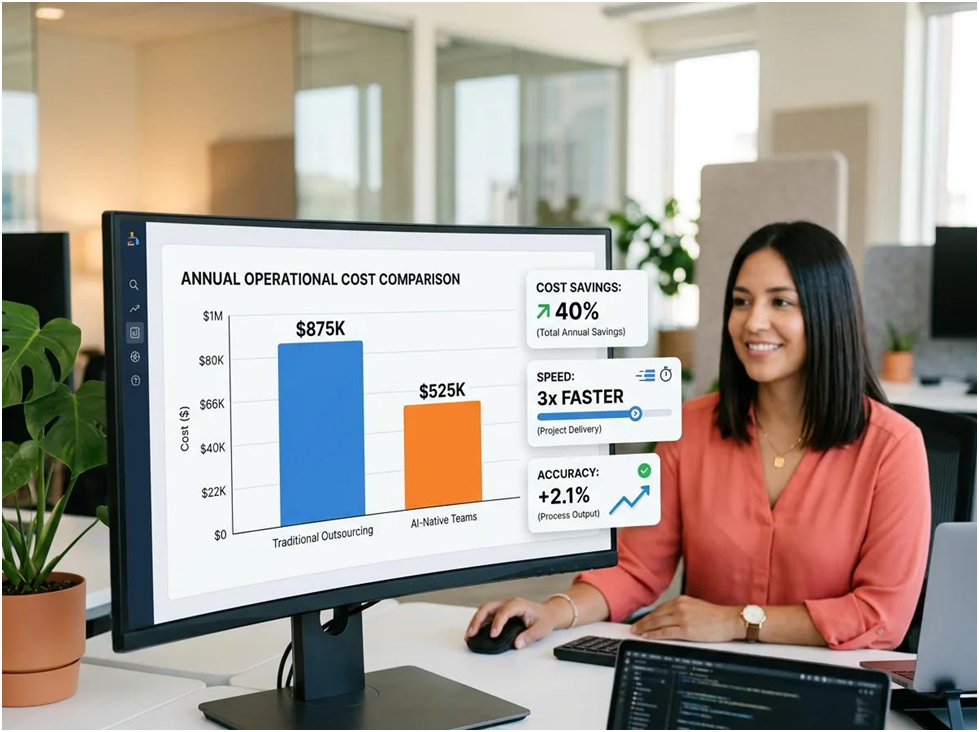
Cost savings are one of the major reasons businesses consider IT outsourcing. However, organizations should evaluate the complete cost rather than focusing only on the initial quotation.
The total cost may include development fees, software licences, infrastructure expenses, maintenance, technical support, and additional feature requirements.
Businesses should clarify:
- Whether pricing is fixed or hourly.
- What services are included in the quotation.
- Whether maintenance and support involve additional charges.
- How changes in project requirements will be billed.
- Whether there are recurring subscription or infrastructure costs.
- What happens if the project timeline changes.
A transparent pricing structure helps businesses plan their budgets and avoid unexpected expenses.
The objective should not be to choose the cheapest provider but to identify a partner that offers the right balance of cost, quality, and long-term value.
4. Prioritize Data Security and Confidentiality
When businesses outsource IT services, they may need to share confidential information, customer data, business documents, system credentials, or access to internal applications.
Without proper security measures, this information could be exposed to unauthorized access, data breaches, or misuse.
Before selecting a provider, understand how they protect your business information.
Important considerations include:
- Secure data storage and transmission.
- Access control and authentication practices.
- Confidentiality agreements and data protection policies.
- Regular security assessments and vulnerability testing.
- Secure backup and recovery procedures.
- Clear procedures for reporting and managing security incidents.
Businesses should also establish contractual requirements covering data ownership, confidentiality, security responsibilities, and data handling after the engagement ends.
For organizations operating in regulated industries, applicable legal and regulatory requirements should also be considered.
Remember, outsourcing technical responsibilities does not mean outsourcing accountability for protecting your business data.
5. Define Clear Deliverables, Timelines, and Service Expectations
One common challenge in outsourcing projects is a mismatch between what the business expects and what the service provider delivers.
This often happens when project requirements, responsibilities, and timelines are not clearly documented.
Before starting a project, establish:
- Clearly defined project scope and deliverables.
- Development milestones and deadlines.
- Testing and quality assurance requirements.
- Communication and progress reporting schedules.
- Revision and approval procedures.
- Responsibilities of both parties.
For ongoing IT services, businesses should consider a Service Level Agreement (SLA).
An SLA can define service availability, response times, issue resolution targets, performance measurements, and escalation procedures.
Clear expectations create accountability and help both parties maintain a productive working relationship.
6. Check Scalability and Flexibility
Business requirements rarely remain the same over time. A growing organization may need additional software features, new integrations, increased infrastructure capacity, or more technical support as its operations expand.
Therefore, businesses should evaluate whether their outsourcing partner can support future requirements.
Consider asking:
- Can the provider handle increasing project complexity?
- Can additional features be introduced when required?
- Can services be expanded as the business grows?
- Does the provider have access to specialized technical resources?
- Can the engagement adapt to changing business priorities?
For example, a startup may initially require a minimum viable product (MVP). As customer demand increases, the business may need additional features, improved performance, and integrations.
Choosing a flexible IT outsourcing partner makes it easier to support these changes without repeatedly switching providers.
7. Establish Effective Communication and Project Management
Technical expertise alone does not guarantee successful outsourcing. Communication and project management are equally important.
Poor communication can lead to misunderstandings, missed deadlines, unnecessary revisions, and delays in decision-making.
Businesses should understand how the outsourcing provider manages communication throughout the project.
Look for:
- A clearly assigned project manager or point of contact.
- Regular progress updates and status reports.
- Defined communication channels.
- Scheduled review meetings.
- Transparent issue escalation procedures.
- Access to project milestones and deliverables.
Using project management platforms and collaboration tools can also improve visibility and coordination.
A reliable outsourcing relationship should feel like a professional collaboration rather than a disconnected external arrangement.
8. Plan for Long-Term Support and Maintenance
IT projects do not necessarily end when a website, application, or software solution is launched.
Technology requires continuous monitoring, updates, bug fixes, security improvements, and performance optimization.
Before signing an agreement, understand what happens after project delivery.
Discuss:
- Post-launch technical support.
- Software updates and maintenance.
- Bug fixing and troubleshooting.
- Security patches and improvements.
- System performance monitoring.
- Future development and enhancement options.
Businesses should also confirm who owns the source code, documentation, licences, and other project assets.
A clear maintenance and ownership arrangement helps prevent future dependencies and ensures continuity when business requirements change.
Conclusion: Make IT Outsourcing a Strategic Business Decision
IT outsourcing can help businesses access specialized technical expertise, manage operational costs, accelerate digital projects, and improve overall efficiency.
However, successful outsourcing requires more than selecting an external technology provider. Businesses must understand their requirements, evaluate technical capabilities, prioritize data security, define clear expectations, and establish effective communication.
The right outsourcing partner should understand your business objectives and provide solutions that support both immediate requirements and future growth.
Rather than treating outsourcing as a short-term cost-saving measure, businesses should approach it as a strategic investment in technology and digital transformation.
The right IT outsourcing decision today can help build a more efficient, scalable, and technology-driven business tomorrow.

How Arav Innovations Can Help
At Arav Innovations, we help businesses turn their digital ideas into practical technology solutions.
Whether you are planning to develop a business website, build a mobile application, or launch a minimum viable product (MVP), our team focuses on understanding your business requirements and delivering solutions aligned with your goals.
We work with businesses to support their digital growth through:
- Custom website development.
- Mobile application development.
- MVP development for startups and growing businesses.
- Business-focused digital solutions.
- Scalable technology development.
Looking for the right technology partner for your next project?
Let’s turn your business idea into a digital solution.
Visit https://aravinnovations.com/ and connect with Arav Innovations to discuss your requirements.