
Introduction
Social media has become an important channel for businesses to connect with potential customers, build brand awareness, and showcase their expertise. However, getting likes, comments, shares, and followers does not always translate into business growth.
A company may receive thousands of views on its posts but still struggle to generate enquiries or attract qualified prospects. The reason is simple: engagement creates attention, but a well-planned strategy turns that attention into business leads.
For businesses offering IT solutions, software development, consulting, or digital services, social media can help attract decision-makers who are actively looking for solutions to their challenges.
The key is to move beyond posting content regularly and create a clear journey from discovery to enquiry.
In this blog, we explore practical social media lead generation strategies that help businesses turn online interactions into meaningful business opportunities.

1. Understand Your Target Audience Before Creating Content
The first step towards generating leads is understanding who you want to reach.
Not every follower is a potential customer. For example, a software development company may want to connect with startup founders, business owners, operations managers, and entrepreneurs who need digital solutions.
Creating content without a clear audience can result in engagement from people who have little interest in your services.
To attract relevant prospects, identify:
- Business challenges: What problems are your potential customers trying to solve?
- Decision-makers: Who makes purchasing decisions within their organizations?
- Business goals: Are they looking to improve efficiency, reduce costs, automate processes, or launch a new product?
- Preferred platforms: Do they actively use LinkedIn, Instagram, or other social media channels?
Once you understand your audience, you can create content that speaks directly to their needs.
For example, instead of posting a generic message about app development, share content explaining how a custom mobile application can simplify customer bookings or improve operational efficiency.
Relevant content attracts the right audience and increases the likelihood of receiving genuine business enquiries.
2. Create Valuable Content That Solves Real Problems
People are more likely to engage with content that helps them understand a problem or discover a practical solution.
Rather than focusing entirely on promotional posts, businesses should share information that demonstrates their knowledge and expertise.
Consider using these content formats:
- Educational posts: Explain industry challenges and practical solutions.
- Problem-and-solution content: Show how a business problem can be addressed with the right technology.
- Case studies: Describe how a project or solution helped address a specific challenge, using verified results where available.
- Short videos and reels: Explain complex ideas through simple, engaging visuals.
- Industry insights: Share relevant trends, useful tips, and lessons for business owners.
For example, a post titled “5 Signs Your Business Needs a Custom Software Solution” can attract companies experiencing operational difficulties.
Similarly, a LinkedIn post explaining the benefits of building a minimum viable product (MVP) can connect with startup founders who want to test an idea before investing in a full-scale application.
The objective is to make your content useful enough that potential customers want to learn more about your business.
3. Choose the Right Social Media Platforms
Every social media platform serves a different purpose. Businesses should focus on the platforms where their target customers are most likely to discover and evaluate their services.
LinkedIn for B2B lead generation
LinkedIn is useful for reaching business professionals, founders, managers, and decision-makers. Companies can share industry insights, discuss business challenges, publish case studies, and build professional relationships.
Instagram for brand awareness
Instagram helps businesses communicate through reels, carousels, stories, and visual demonstrations. It can showcase services, explain solutions, highlight projects, and encourage prospects to send direct messages.
Facebook for community engagement
Facebook can help businesses reach relevant communities, participate in discussions, and promote useful content to selected audiences.
Instead of trying to maintain an active presence everywhere, start with one or two relevant platforms. Focus on creating quality content, engaging with the right people, and measuring the results.
Choosing the right platform makes your social media marketing efforts more focused and productive.

4. Use Clear Calls to Action (CTAs)
One common mistake businesses make is publishing engaging content without telling their audience what to do next.
A call to action (CTA) provides a clear next step for interested prospects. Without one, potential customers may enjoy your content but leave without learning more about your services.
Effective CTAs include:
- “DM us to discuss your business idea.”
- “Book a consultation to explore the right solution.”
- “Contact our team to learn more about our services.”
- “Planning to build an MVP? Let’s discuss your requirements.”
- “Visit our website to explore our solutions.”
The CTA should match the purpose of the content.
For example, an educational post can invite users to download a useful guide, while a service-focused post can encourage them to book a consultation.
Keep your CTA simple and specific. Asking people to complete too many actions at once can create confusion.
A well-placed CTA helps transform social media engagement into a meaningful next step.
5. Turn Comments and Direct Messages Into Conversations
Comments and direct messages can provide valuable opportunities to understand potential customers and identify business needs.
However, responding with a generic sales pitch may discourage people from continuing the conversation.
Instead, focus on building a genuine connection.
When someone asks about a service, respond clearly and offer relevant information. If a prospect expresses interest in developing an application, ask about their business objectives, target users, and key requirements.
For example, a potential customer might comment on a post about website development. Rather than immediately sending a price list, you could ask whether they need a new website or want to improve an existing one.
This approach helps you understand their needs before recommending a solution.
Businesses should also respond promptly, maintain a professional tone, and follow up with interested prospects when appropriate.
The goal is not simply to reply to messages. It is to understand the customer’s challenge and guide them towards a suitable solution.
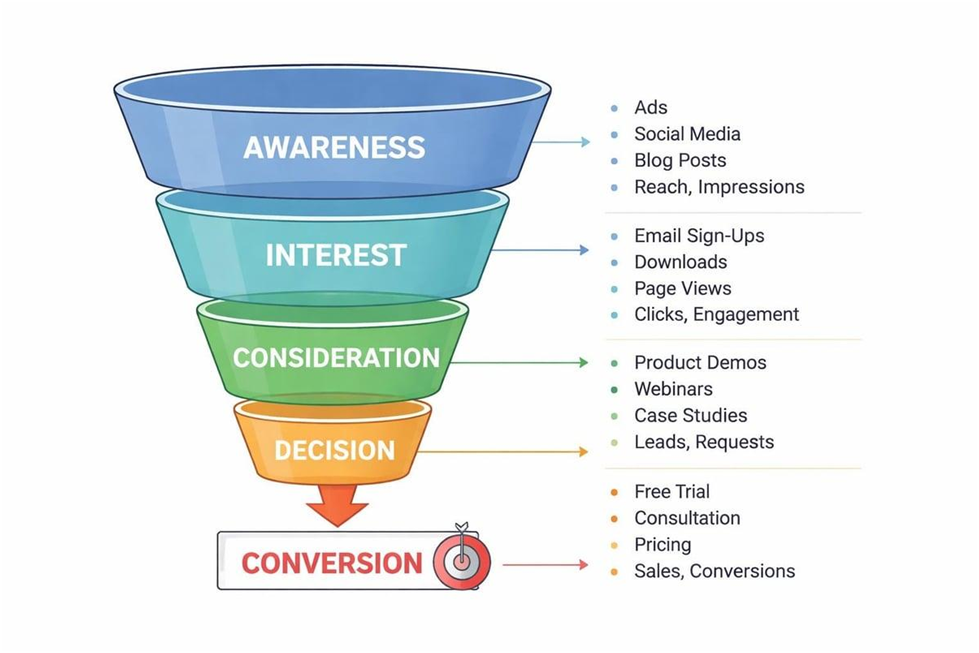
6. Build a Simple Social Media Conversion Funnel
A social media conversion funnel explains how a person moves from discovering your business to becoming a potential customer.
Businesses can organize this journey into four stages.
Stage 1: Awareness
The prospect discovers your brand through reels, posts, shares, search, or professional discussions.
Stage 2: Interest
The prospect engages with your content, visits your profile, explores your website, or asks questions.
Stage 3: Consideration
The prospect reviews your services, examines relevant case studies, compares options, or schedules a discussion.
Stage 4: Conversion
The prospect submits an enquiry, books a consultation, requests a proposal, or takes another agreed business step.
At each stage, provide the information needed to move forward.
For instance, an Instagram reel introducing an MVP development service can direct interested viewers to a service page. That page can explain the development process and invite them to schedule a consultation.
A clear conversion funnel reduces uncertainty and makes it easier for prospects to understand what to do next.
7. Use Landing Pages and Lead Capture Forms
Social media engagement becomes more valuable when interested prospects have an easy way to share their requirements.
A dedicated landing page can provide more information about a specific service than a general homepage.
An effective landing page should include:
- A clear headline explaining the value of the service.
- A concise description of the problem being solved.
- Relevant services, benefits, or verified project examples.
- A prominent CTA.
- A simple enquiry form requesting only necessary information.
For example, a company offering custom software development could create a landing page for businesses seeking workflow automation.
The form might ask for the visitor’s name, business email, company name, and a brief description of the project.
Keep forms short and explain how submitted information will be used. Collect contact details responsibly and obtain appropriate consent for further marketing communications.
A smooth landing-page experience helps turn social media traffic into identifiable business enquiries.
8. Measure the Metrics That Actually Matter
Likes and follower counts can indicate audience interest, but they do not tell the complete story.
To understand whether your social media strategy generates business opportunities, track metrics connected to your objectives.
Important metrics include:
- Engagement rate: How actively people interact with your content.
- Profile visits: How many users explore your business profile.
- Website clicks: How many people visit your website through social media.
- Enquiries generated: How many people contact your business.
- Qualified leads: How many enquiries match your target customer profile.
- Lead conversion rate: The percentage of leads that complete a defined conversion action.
- Cost per lead: The amount spent to acquire each lead, when running paid campaigns.
Use platform analytics, website analytics, and a customer relationship management (CRM) system where appropriate to monitor results.
For example, if a post receives substantial engagement but produces few enquiries, review its audience relevance, CTA, and destination page.
If a post generates fewer interactions but attracts several qualified prospects, it may be more valuable from a business perspective.
Regularly reviewing these metrics helps companies improve their content strategy and allocate resources more effectively.
9. Build Trust Before Asking for a Sale
Business customers rarely make important purchasing decisions based on a single social media post.
They want to understand whether a company has the expertise, reliability, and capabilities to meet their needs.
Trust can be developed through consistent, transparent communication.
Share useful insights, explain your working process, showcase genuine projects, answer questions, and provide clear information about your services.
For technology companies, this may include explaining how they approach application development, software testing, cybersecurity, or ongoing maintenance.
Avoid exaggerated promises and unsupported claims. Instead, demonstrate your capabilities through relevant examples and realistic explanations.
Businesses should also maintain consistent branding across social media profiles, websites, and other customer touchpoints.
When potential customers can easily understand what you offer and why it matters, they are more likely to consider starting a conversation.

Conclusion
Turning social media engagement into business leads requires more than attractive posts or a growing follower count. It involves understanding your audience, creating valuable content, selecting the right platforms, encouraging meaningful conversations, and providing clear paths to conversion.
Businesses should combine these activities with effective landing pages, consistent follow-ups, and regular performance measurement.
The most important principle is to focus on the quality of engagement rather than the quantity alone. A smaller audience of relevant decision-makers can create more meaningful opportunities than a large audience with little interest in your services.
At Arav Innovations, we believe technology should support real business goals. Whether you are planning to develop a website, build an MVP, create a custom application, or improve your digital operations, the right digital strategy can help turn interest into action.
Ready to turn your business goals into digital opportunities?
Connect with Arav Innovations to explore technology solutions designed around your business needs.
CTA: Visit https://aravinnovations.com/ or DM us GROW to start a conversation about your next digital project.